
Function of pipe flanges
1. Primary Connection Function
To connect pipes, pipe fittings, valves, pumps, pressure vessels and other equipment nozzles into a complete piping system.
Flanges provide a rigid joint surface for assembly.
2. Easy Disassembly & Maintenance
This is the biggest advantage compared with welded joints.
Flanged joints can be unbolted quickly without cutting pipes.
Convenient for pipeline inspection, cleaning, component replacement and equipment overhaul.
3. Sealing Function
With a gasket installed between two matching flange faces, uniform bolt clamping force compresses the gasket to form a leak-tight seal against liquid, gas or steam medium.
Different flange facing types (RF, RTJ, FF) adapt to different pressure and temperature working conditions.
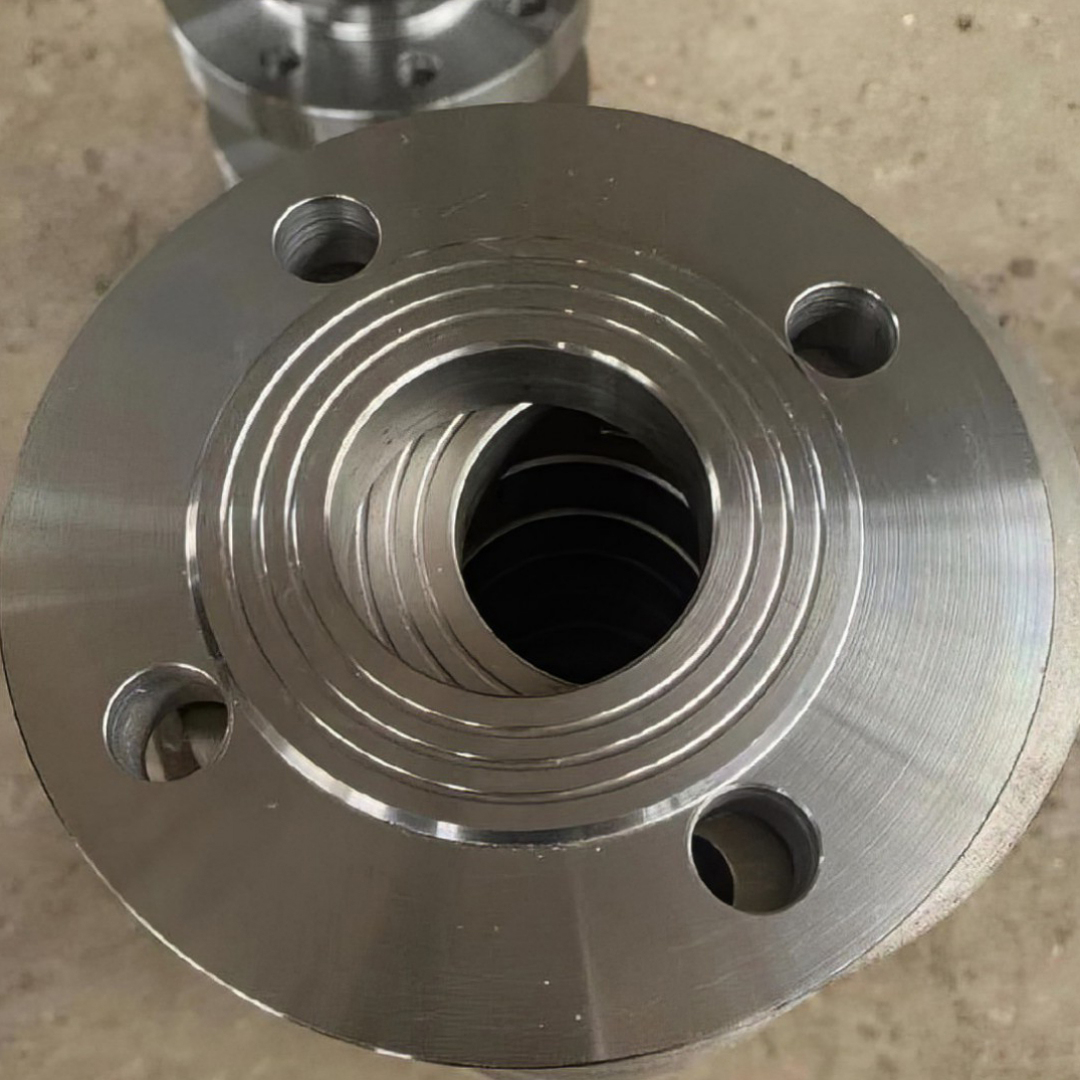
4. Bear Load & Resist External Force
The flange disc and hub share pipeline weight, thermal displacement, vibration and external bending force.
WN flanges with long tapered hubs perform best for high pressure and high temperature services.
5. Convenient Construction & Alignment
Bolting structure allows minor adjustment to align bolt holes during site installation.
Lap joint flanges can rotate freely to simplify bolt hole matching on site.
6. Segmented Pipeline Layout
Long pipelines can be divided into multiple sections by flanges, facilitating segmented prefabrication, transportation and field installation.
Concise English Text (Directly usable)
Pipe flanges are key components for industrial piping systems, with main functions as follows:
Connect pipes, fittings, valves and process equipment together.
Enable easy disassembly for maintenance, inspection and replacement of components.
Achieve reliable sealing by compressing gaskets between two flange faces via bolt tension.
Support piping loads and resist vibration, thermal stress and external forces.
Simplify on-site installation and bolt hole alignment.
Supplementary key note
Welded joints are permanent; flanged joints are demountable joints. Whenever frequent disassembly is required, flanges are the preferred connection method.