
Connection methods of flange pipe fittings
Classified by welding/assembly form, compliant with ASME B16.5 / ASME B16.9 standards. Suitable for foreign trade explanation.
1. Butt Weld Connection (BW – Most widely used)
Applicable parts:
WN Weld Neck Flange + Butt-Weld fittings (90° elbow, tee, reducer, cap, stub end)
Two ends form equal-thickness butt joint, full penetration welding.
Advantages: High strength, good stress distribution, smooth inner flow, suitable for high pressure, high temperature, hazardous medium.
Notice: Must match NPS and wall thickness (Schedule).
Standard combination: WN flange ↔ BW elbow / tee / reducer
2. Socket Weld Connection (SW)
Applicable parts:
Socket Weld Flange + Socket Weld fittings
Pipe inserts into the flange/fitting socket, sealed by fillet weld.
Limitation: Generally used for small bore ≤ NPS 4, low & medium pressure instrument piping.
Disadvantage: Small gap inside may cause corrosion; not recommended for severe cyclic service.
3. Slip-On Connection (SO)
Applicable parts:
Slip-On Flange + Straight steel pipe
Pipe passes through the flange inner hole; fillet weld both inside and outside of flange.
⚠️ Important: SO flange cannot directly connect to BW fittings. A straight pipe nipple must be added in between.
4. Lap Joint Connection (LJ System)
Matching set: Lap Joint Flange + Stub End
Stub end is butt-welded to pipe or BW fittings.
LJ flange is loose, rotating freely on the stub end, no welding on the LJ flange itself.
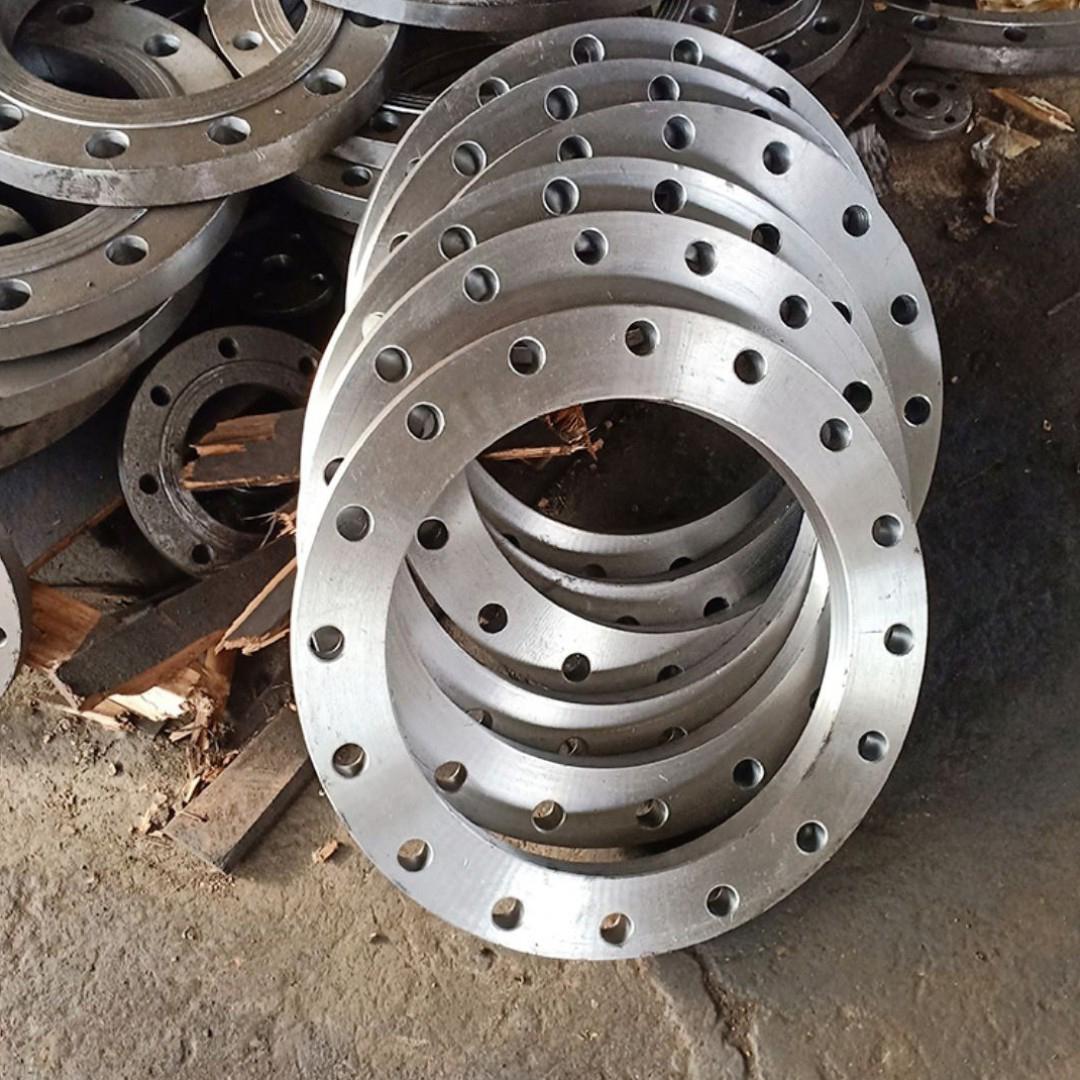
Advantage: Easy bolt hole alignment; save cost when using stainless steel (only stub end needs stainless material).
5. Threaded Connection (NPT Thread)
Applicable parts: Threaded Flange
Connects with threaded pipe / threaded fittings via NPT thread, no welding required.
Application: Low pressure, fire-risk occasions where welding is forbidden.
Defect: Easy leakage under temperature variation; not for high pressure.
6. Flange-to-Flange Bolted Connection
Two flanges are aligned, gasket placed between faces, tightened by bolts.
This is the sealing joint between:
Flange end of pipeline and valve flange
Flange and equipment nozzle
Blind flange and pipeline flange
This is the final assembly joint, not welding between flange and fitting.
Clear Classification Summary
Welding between flange and pipe/fitting
BW: WN flange + BW fittings / pipe
SW: SW flange + SW fittings / pipe
Slip-on: SO flange + straight pipe
Lap joint: Stub end (BW welded) + loose LJ flange
Thread: TH flange + threaded pipe
Assembly between two flanges: Bolted connection with gasket
Concise English Version (Can send directly to clients)
Connection Methods of Flanges and Pipe Fittings
Butt Weld (BW)
Weld Neck flanges can be butt-welded directly to butt-weld elbows, tees, reducers and other fittings. Ideal for high pressure & high temperature working conditions.
Socket Weld (SW)
Socket weld flanges connect pipe and socket weld fittings by fillet welding, mainly for small size pipelines below NPS 4.
Slip-On Connection
Pipe slips through slip-on flange and fixed by fillet weld. Slip-on flanges cannot be directly welded to butt-weld fittings.
Lap Joint Connection
Stub end is butt-welded to pipe/fittings, while lap joint flange is loose mounted on stub end without welding.
Threaded Connection
Threaded flanges connect with threaded pipe by NPT thread, welding-free for low-pressure service.
Bolted Flange Joint
Two mating flanges are clamped together by bolts with gasket in between to realize sealing.