
What are the different types of pipe flanges?
Introduction
Pipe flanges are key connecting components in piping systems. They create detachable joints to connect pipes, valves, pumps and other equipment for convenient installation, inspection and maintenance. Different working pressure, temperature, medium and installation conditions require corresponding flange types. Below introduces the most widely used standard pipe flanges.
Main Types of Pipe Flanges
1. Weld Neck Flange (WN Flange)
Weld neck flanges feature an elongated tapered hub. It connects to pipes via full penetration butt welding.
Advantages: Excellent structural strength, good stress distribution, high tightness.
Application: High pressure, high temperature, heavy load, critical pipelines for oil & gas, petrochemical and power plants.
2. Slip On Flange (SO Flange)
The flange bore is slightly larger than the outer diameter of the pipe. The pipe slides into the flange, then fillet welding is carried out inside and outside.
Advantages: Low cost, easy alignment and simple installation.
Application: Low and medium pressure, low-temperature conventional pipelines.
3. Threaded Flange (Thread Flange)
No welding required. It connects with pipes through internal threads.
Advantages: Quick assembly, suitable for places where welding is prohibited.
Application: Small-bore pipelines, fire protection systems and flammable medium piping.
4. Socket Weld Flange (SW Flange)
The pipe inserts into the flange socket and is sealed by fillet welding.
Advantages: Better fatigue resistance than threaded flanges.
Application: Small size, high-pressure pipelines with nominal diameter below DN50.
5. Blind Flange (BL Flange)
A solid flat disc without a bore. It is used to block pipeline ends or close equipment openings.
Advantages: Convenient for later expansion and inspection.
Application: Pipeline terminals, pressure vessel openings.
6. Lap Joint Flange (LJ Flange)
Matched with a lap joint stub end. The flange itself does not contact the medium and can rotate freely.
Advantages: Easy bolt hole alignment; low cost when using expensive alloy or stainless steel.
Application: Stainless steel pipelines, frequent disassembly working conditions.
7. Reducing Flange
It realizes transition between two different pipe sizes within one flange.
Advantages: Saves separate reducer and flange installation.
Application: Pipeline diameter transition positions.
Additional Classification Standards
Flanges can also be classified by sealing face types:
Raised Face (RF)
Flat Face (FF)
Ring Type Joint (RTJ)
Male and Female Face (MFM)
Tongue and Groove Face (T&G)
Pressure classes include Class150, Class300, Class600, PN10, PN16, PN25, PN40 etc. Standards cover ASME B16.5, EN1092-1, GB, JIS.
About Cangzhou Yunxinda International Trade Co., Ltd.
Cangzhou Yunxinda International Trade Co., Ltd. is a professional supplier of flanges and pipe fittings based in Cangzhou, China.
We supply a full series of flanges: weld neck, slip on, threaded, socket weld, blind, lap joint and reducing flanges. Materials include carbon steel, stainless steel and alloy steel, complying with ASME, EN, GB and other international standards.
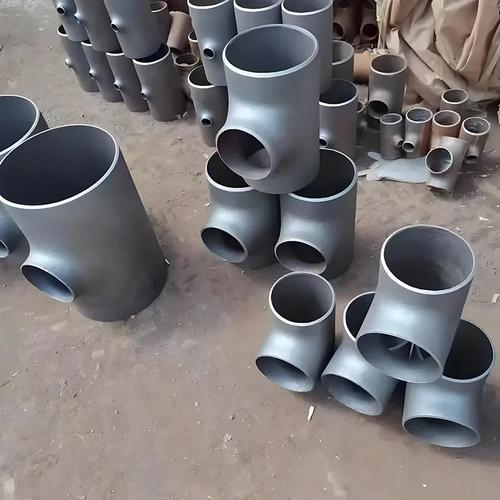
Our supporting products cover elbows, tees, reducers, caps and crosses. We provide standard products as well as customized processing according to drawings. Our piping components are widely used in petrochemical, natural gas, water supply, power engineering and construction projects.
We serve global importers, engineering contractors and pipeline distributors. If you need technical selection guidance, size confirmation or quotation support, feel free to contact us.