
Working principle of electric retractable grandstand
1. Basic Working Principle Overview
The electric retractable grandstand adopts layered nested telescopic mechanical structure. Each tier of the stand is equipped with load-bearing roller assemblies. Driven by an electric synchronous transmission system, all tiers realize automatic outward extension and inward stacking retraction.
When extending, each tier stretches backward in sequence to form stepped spectator platforms. When retracting, each tier slides forward and nests under the front tier to save venue space. The whole system is equipped with mechanical locking and electrical safety protection devices to ensure stable operation under static load.
2. Composition of Electric Drive System
Power Unit: Geared brake motor. The built-in brake can lock the motor shaft once power cuts off to prevent accidental sliding.
Synchronous Transmission Mechanism: Main forms include chain drive, rack pinion drive. It ensures left and right sides and each tier run at consistent speed to avoid deflection and jamming.
Roller Walking Assembly: Heavy-duty polyurethane rollers are installed at the bottom of each steel frame. When moving, rollers bear the load; after full expansion, the supporting feet land to undertake spectator load and reduce roller pressure.
Limit Control System: Travel limit switches (front limit for retraction, rear limit for full extension). It automatically cuts off motor power when reaching designated position.
Control Cabinet: Central control panel with start, stop, emergency stop buttons. Optional remote control operation.
Mechanical Self-locking Device: Automatic latches engage when fully unfolded, resisting horizontal thrust and spectator vibration.
3. Complete Operation Flow
Extension Process
Start the control system, motor energizes and releases motor brake.
Transmission parts output power, pulling each tier to slide backward orderly.
Each tier moves to the rear limit position, triggering limit switches.
Motor stops automatically; mechanical lock latches pop out to lock all tiers firmly.
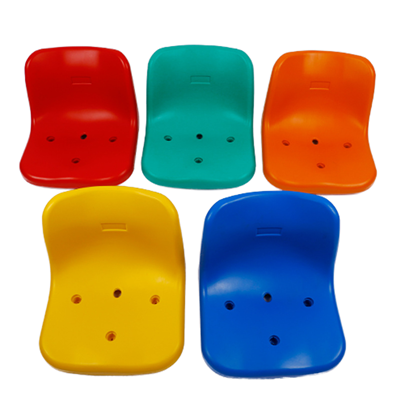
Seats can be unfolded for use.
Retraction Process
Start retraction command; the system first unlocks all mechanical locking devices.
Motor runs reversely, driving each tier to slide forward sequentially. Rear tiers enter the space under the front tier for nested storage.
When reaching the forward limit position, the power supply is cut off automatically.
All tiers are stacked compactly, freeing up ground space.
4. Core Technical Principles
Synchronization Principle
Multiple tiers share linked transmission. The synchronous structure eliminates speed difference between left and right frames. Prevent track deviation, frame distortion and mechanical blocking during movement.
Load Conversion Principle
Moving status: Rollers bear all structural weight
Working status (fully extended): Support legs contact the ground, rollers suspend without force. This prolongs roller service life and improves bearing safety.
Double Safety Protection
Electrical protection: Emergency stop button, overload protection, travel limit protection.
Mechanical protection: Motor brake + independent mechanical lock. Even if power fails, the stand cannot slide freely.
5. Brief Summary (Short Paragraph for Web & Catalogue)
The electric retractable grandstand relies on geared brake motors and synchronous transmission components to drive layered steel frame units equipped with walking rollers. By means of nested sliding movement, it achieves automatic expansion into stepped spectator stands and compact stacking retraction. Travel limit switches control stroke, while motor brakes and mechanical self-locking structures form dual safety guarantee, supporting stable automatic operation.