
Electric retractable grandstand installation and construction plan
Applicable Scope: Indoor electric telescopic grandstand projects for gymnasiums, schools, multi-functional halls and stadiums (Hebei Yunxinda standard construction specification)
Construction Objective: Complete modular assembly, electrical debugging, safety locking calibration and full-load operation test to ensure the grandstand runs stably, synchronously and safely, meeting national and international venue seating safety standards.
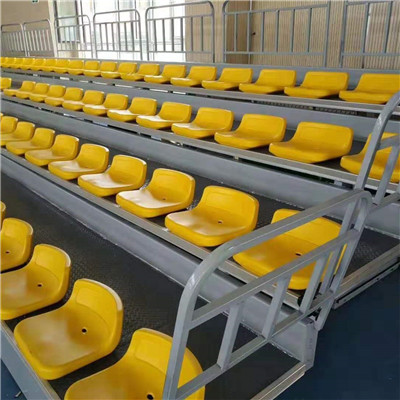
1. Pre-Construction Preparation
1.1 Site Condition Check
The construction ground must be flat, solid and clean, with concrete ground strength ≥ C25. The overall ground level error of the installation area shall not exceed 2mm per meter, and no obvious hollowing, cracks or uneven settlement is allowed. Clear all sundries, dust and obstacles in the telescopic stroke range to avoid jamming during operation. For renovated venues, remove old damaged stands and polish the installation base to ensure flat contact surface.
1.2 Tools and Materials Preparation
Construction Tools: Level ruler, infrared level, tape measure, torque wrench, electric wrench, Allen wrench, impact drill, multimeter, insulation tester, safety protective tools.
Supporting Materials: Galvanized expansion bolts, stainless steel lock washers, waterproof sealant, anti-rust paint, temporary fixing fixtures.
Equipment Inspection: Check all steel frame modules, rollers, transmission chains, motors, limit switches, control cabinets and folding seats for complete specifications, no deformation, no paint peeling and no mechanical damage.
1.3 Safety Preparations
Set up construction warning zones and isolation barriers. Cut off irrelevant power sources on site. All construction workers must wear safety gloves and non-slip shoes. Electrical installation and debugging must be operated by certified electricians to avoid electric shock risks.
2. Overall Construction Process Flow
Site measurement & positioning → Ground base fixing → Frame module assembly → Roller and guide system installation → Synchronous transmission system installation → Electrical system wiring & debugging → Seat and guardrail installation → Mechanical locking calibration → Full-stroke test running → Safety inspection & rectification → Project acceptance & delivery
3. Detailed Construction & Installation Steps
3.1 Measurement and Positioning
According to the construction drawings, mark the central axis, installation contour line and base fixing hole positions of the grandstand. Ensure the overall horizontal alignment of each tier, consistent row spacing and reserved passage size. All positioning lines must be accurate and checked twice to avoid overall deviation of the stand.
3.2 Base and Fixed Frame Installation
Install the front fixed frame first, which is the main load-bearing foundation of the entire telescopic stand. Fix the base on the concrete ground with M10/M12 galvanized expansion bolts. Adjust the level with a level ruler to ensure the horizontal error of the fixed frame is controlled within 2mm. After leveling, tighten all bolts in sequence, fill the gaps between the base and the ground with waterproof sealant, and do anti-rust treatment on the drilling positions to prevent corrosion.
3.3 Movable Tier Frame Assembly
Assemble the rear movable frames tier by tier in accordance with the principle offixed front and movable rear. Connect upright columns, cross beams and inclined struts with high-strength bolts, and pre-tighten all connecting parts first. After the overall frame is aligned horizontally and vertically, perform secondary torque tightening to ensure the frame is not deformed or skewed. Reserve accurate telescopic gaps between each tier to ensure free nesting and sliding.
3.4 Roller and Guide System Installation
Install heavy-duty silent polyurethane rollers at the bottom of each movable frame, and equip each row with limit guide devices. Ensure the rollers are flexible in rotation, no jamming, and the left and right guide structures are symmetrical. After installation, test the manual push-pull sliding of each single tier to confirm no deviation, no shaking and smooth walking.
3.5 Synchronous Transmission System Installation
Install geared brake motors, transmission chains and synchronous connecting rods. Calibrate the left and right transmission speed to ensure synchronous operation of the whole stand. Adjust the chain tightness moderately — too tight will cause motor overload, and too loose will cause asynchronous sliding. Install motor protective covers to prevent dust and collision damage.
3.6 Electrical System Installation & Debugging
Install the control cabinet, laying wiring in standard hidden or exposed wiring mode with complete wire grooves and fixing parts. Connect power lines, control lines, limit switch lines and emergency stop lines correctly. After wiring, test insulation and circuit continuity to eliminate short circuit and leakage risks.
Set and debug the front and rear travel limit switches: the stand automatically powers off and stops when fully extended and fully retracted. Test the emergency stop function to ensure immediate power cut and static braking after pressing the emergency stop button.
3.7 Seat and Safety Accessories Installation
Install folding tip-up seats row by row according to the marked spacing (standard 450–500mm). Fix the seat brackets firmly, adjust the seat flip flexibility to ensure automatic flat folding after retraction and stable vertical state after extension. Install side guardrails, end baffles and anti-pinch protection devices at the passage and edge positions to meet venue safety standards.
3.8 Mechanical Locking Device Calibration
Debug the automatic mechanical self-latching structure. When the stand is fully extended, the locking bolt automatically pops up to lock each tier frame, resisting horizontal vibration and thrust. When retracting, the lock automatically unlocks synchronously with the electric system. Ensure no slipping or displacement of the stand under static load.
4. Overall Test & Commissioning
4.1 No-Load Test
Perform continuous 10-cycle full extension and retraction no-load tests. Check that the whole stand runs smoothly, no abnormal noise, no jamming, no deviation, and the left and right synchronization error is within the allowable range. Verify that limit stopping and emergency stop actions are sensitive and effective.
4.2 Load Simulation Test
Simulate spectator live load, check the overall stability of the frame, no obvious shaking or deformation. Verify that the locking structure is firmly locked and all stress-bearing parts meet load-bearing design requirements.
4.3 Anti-Collision and Gap Inspection
Check the gaps between folded seats and upper frames to ensure no scraping, collision or extrusion during telescopic operation. Eliminate all mechanical interference points.
5. Finishing and Anti-Corrosion Treatment
Clean all construction dust and sundries on the equipment. Touch up the scratched paint and welding parts with anti-rust paint and finish paint. Sort out the on-site lines, fix the wire grooves neatly, and paste equipment operation warning labels and safety prompt signs.
6. Acceptance Standards & Delivery Requirements
- The overall horizontal flatness of the grandstand meets the design standard, no frame deformation or structural looseness.
- The electric system operates stably, with sensitive limit and emergency stop functions, no electric leakage or overload failure.
- The mechanical locking is reliable, the seats flip flexibly, and the guardrail protection is complete.
- The full-stroke telescopic operation is smooth, no jamming, no abnormal noise, and the synchronization effect is good.
- The surface anti-corrosion treatment is in place, with neat appearance and no hidden construction dangers.
7. Construction Safety Precautions
- It is strictly forbidden to carry out electrical wiring and debugging work with electricity in disorder; electrical operations must be performed by professional electricians.
- During frame assembly and lifting, avoid collision and extrusion to prevent personal injury and equipment damage.
- Do not stand in the telescopic stroke range during equipment test operation to prevent clamping accidents.
- All bolts must be locked with spring washers to prevent loosening caused by long-term vibration.
- Outdoor or humid venues must do well in waterproof and moisture-proof treatment of electrical components to extend service life.
8. Post-Construction Guidance
After acceptance, provide customers with equipment operation tutorials, daily maintenance guidelines, and spare parts list. Explain correct startup, shutdown and emergency operation methods, and guide users to regularly check bolt tightness, chain lubrication and electrical circuit safety.