
What is an inground basketball hoop
An inground basketball hoop, also known as an in-ground fixed basketball goal, is a permanent outdoor basketball system fixed firmly into the ground via a concrete buried foundation. Unlike portable basketball hoops that rely on water or sand-filled plastic bases for balance, its main support pole is embedded and secured within poured concrete underground, forming a stable permanent sports facility widely used for residential backyards, community courts, schools, parks and professional training venues.
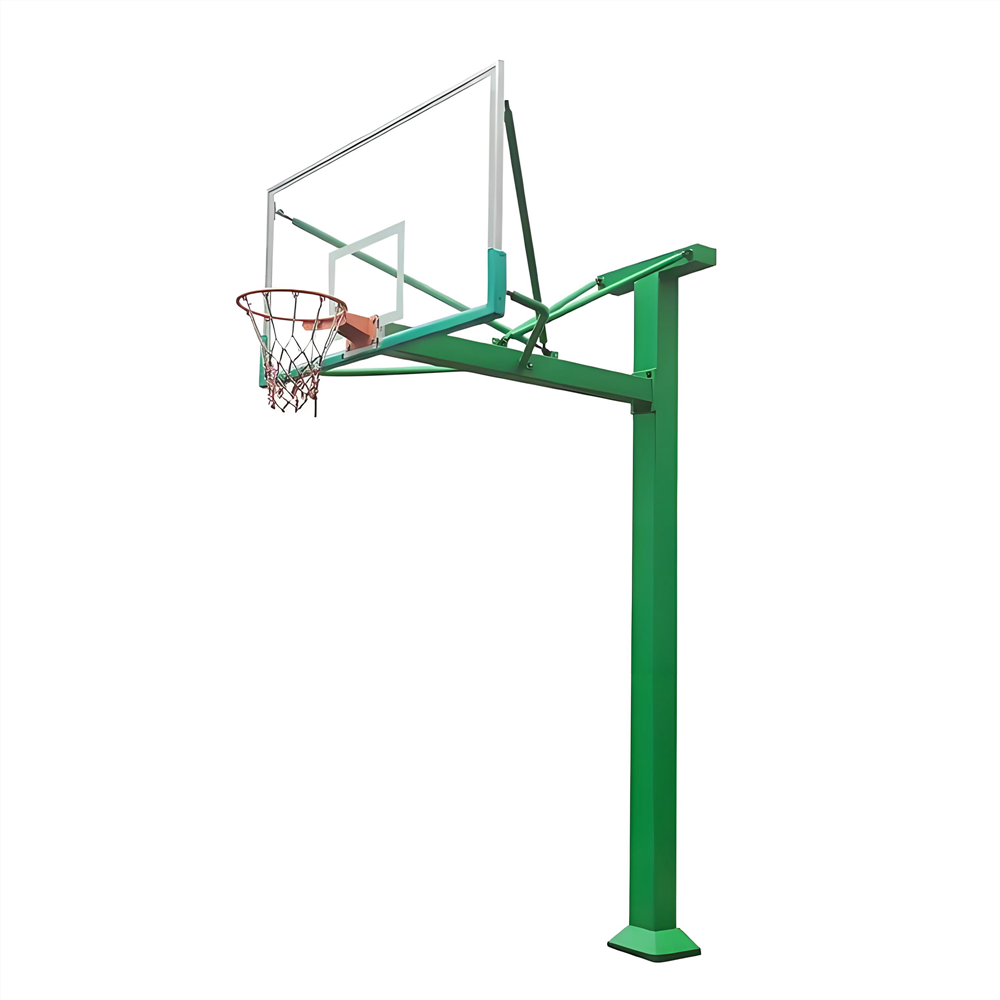
Core Structural Composition
1. Underground Concrete Foundation (The Most Distinctive Feature)
A pit is dug on the ground first (standard specification: roughly 80cm × 80cm × 100cm), the base flange of the steel pole is placed inside, then filled with concrete and fully cured. This buried concrete footing locks the whole hoop to the ground permanently, which is the key difference separating it from portable hoops.
2. Main Support Pole
Most adopt thick square Q235 or Q345 carbon steel. Premium versions undergo hot-dip galvanizing plus electrostatic powder spraying to resist rust, rain and wind erosion for long-term outdoor use. Many models support manual crank or hydraulic height adjustment, switching between official standard height (3.05m for adults) and lower heights suitable for kids and teenagers.
3. Backboard
Common options include tempered glass, acrylic and high-strength polycarbonate panels. Tempered glass delivers the most authentic ball rebound effect consistent with professional courts, favored by regular players.
4. Basketball Rim & Net
Heavy-duty solid steel rims can withstand dunks and hanging impacts; wear-resistant nylon nets adapt to all weather conditions outdoors. Optional protective foam padding can be wrapped around the pole to prevent collision injuries.
Primary Characteristics of Inground Basketball Hoops
Advantages
Extremely stable: Almost no pole shaking during fierce shooting, layups and dunks, identical to formal stadium hoops
Long service life: High-quality anti-corrosion inground hoops have a safe service life of 12–15 years outdoors; portable hoops only last 2–5 years on average
High safety: No tipping risk caused by strong wind or intense movement, ideal for families with children
Neat appearance: No bulky plastic base occupying yard space, improves courtyard aesthetics and can raise residential property value
Low long-term maintenance: Only regular bolt tightening and net replacement are needed
Drawbacks
Higher upfront cost: Includes the hoop itself plus excavation, concrete and professional installation fees
Non-portable: Cannot be moved after concrete solidifies; relocation requires breaking up the concrete foundation
Permanent ground modification: Ground restoration is needed if you plan to remove the hoop later
Applicable Scenarios
Inground basketball hoops are the preferred choice for homeowners who intend to live long-term, families with frequent basketball activities, primary and secondary schools, community public sports grounds and dedicated backyard home courts.